The Grand National attracts millions of viewers each year, many of whom watch the race only once a season. If you’re new to horse racing — or new to betting on it — the amount of information available can feel overwhelming.
This guide is written specifically for complete beginners. It explains the basics clearly, avoids jargon where possible, and focuses on understanding rather than speculation.
The Ultimate Beginner’s Guide to the Grand National
Welcome to the world’s most famous horse race. Since 1839, the Grand National has captured the imagination of millions, turning casual viewers into racing fans for one afternoon every April.
If you’ve never placed a bet or watched a race before, the Grand National can seem overwhelming. This guide strips away the jargon to give you a clear, simple understanding of how the “Greatest Show on Earth” actually works.
1. How the Race Works: The Basics
The Grand National is a National Hunt horse race, which simply means the horses must jump over obstacles (fences) rather than running on a flat track.1
The Distance and Fences
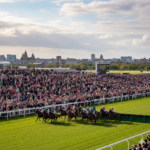
- The Course: It is held at Aintree Racecourse in Liverpool.2
- The Distance: The race is roughly 4 miles and 2½ furlongs long. This is an incredible test of stamina; most standard races are much shorter.
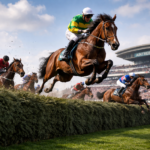
- The Fences: There are 30 fences in total. While some have famous names like Becher’s Brook or The Chair, they are all made of a spruce-covered wooden frame.3
- The Field: A maximum of 34 horses (reduced from 40 in 2024 for safety) line up to start the race.4
The Handicap System
The Grand National is a handicap race.5 To make the race fair and competitive, a “Handicapper” assigns different weights for each horse to carry.6
- The Theory: A better, faster horse carries more weight (in the form of lead weights in the saddle) to slow it down.
- The Goal: In a perfect world, every horse would cross the finish line at exactly the same time.
2. Understanding Betting Markets
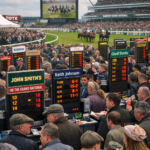
When you look at a betting app or a shop board, you’ll see a list of horses with numbers next to them. These are the odds.
Fixed Odds (Fractional)
In the UK, odds are usually shown as fractions (e.g., 10/1).
- 10/1 (“Ten to One”): For every £1 you bet, you win £10 (plus you get your £1 stake back).
- 4/1: For every £1 you bet, you win £4.
- Favorites: The horse with the lowest numbers (e.g., 4/1) is the favorite—the horse the public thinks is most likely to win. Longshots (e.g., 66/1) are considered less likely to win but offer a bigger payout.7
Win vs. Each-Way
This is the most common point of confusion for beginners.
- Win Bet: You only collect money if your horse finishes 1st.
- Each-Way (E/W) Bet: This is actually two bets in one. Half your stake goes on the horse to Win, and the other half goes on the horse to Place (usually finishing in the top 4 or 5).
- Tip: If your horse finishes 3rd, you lose the “Win” part of your bet but win the “Place” part at a fraction of the odds (usually 1/4 or 1/5).
3. How to Read the Racecard
When you look at the program (the “Racecard”), it’s easy to get lost in the numbers. Here is what actually matters:
| Column | Meaning |
| Form | A string of numbers like 12-P4. These are recent results. 1 = First, 2 = Second, P = Pulled Up (didn’t finish). Read left to right (oldest to newest). |
| Age | Most winners are aged between 7 and 10. Too young (under 7) and they lack experience; too old and they may lack the speed. |
| Weight | Measured in stones and pounds (e.g., 11-04). Higher weight is a bigger burden. |
| Jockey/Trainer | The human team. Famous names like Willie Mullins or Rachael Blackmore often attract more bets. |
4. Beginner Tips for Picking a Horse
You don’t need to be an expert to join in the fun. Many people pick based on:
- The Name: A name that resonates with a family member or a hobby.
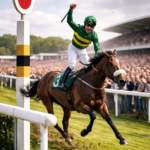
- The Silks: The bright, colored patterns the jockeys wear.
- The Ground: If it has rained a lot, look for horses that like “Heavy” or “Soft” ground. If it’s sunny, look for “Good” ground specialists.
A Quick Checklist:
- [ ] Has the horse finished a long race (3+ miles) before?
- [ ] Is the horse carrying a mid-range weight (10st 7lbs to 11st 5lbs)?
- [ ] Does the “Form” show they have finished their last few races?
Final Thoughts
The Grand National is complex, challenging, and unpredictable — which is exactly why it attracts so much attention.
For beginners, the most valuable thing is not tips or shortcuts, but clarity. Once the basics are understood, the race becomes far more engaging and far less intimidating.
This guide is designed to be a starting point.