The Grand National is one of the most famous horse races in the world — and also one of the most misunderstood.
For many, it’s a once-a-year tradition. For others, it’s a race that rewards careful analysis, patience, and an understanding of what makes Aintree unique. Whether you are completely new to the Grand National or have followed it for years, this guide is designed to explain what makes the race different, why it is so challenging, and how to approach it with clarity rather than guesswork.
What Is the Grand National?
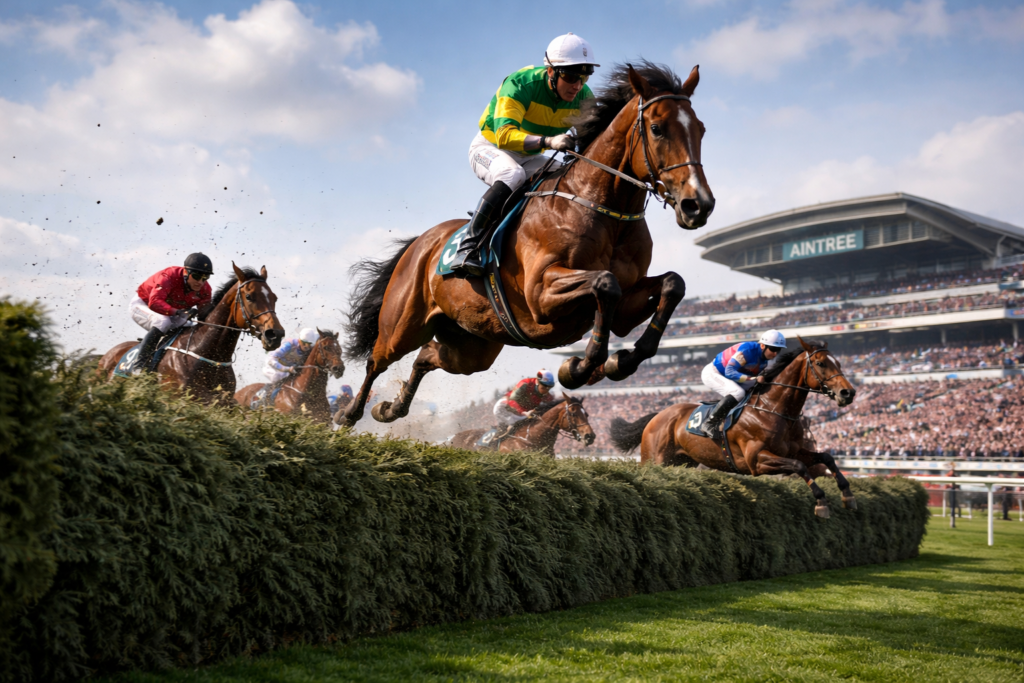
The Grand National is a steeplechase run annually at Aintree Racecourse, typically in early April. It is contested over a distance of approximately four miles and two furlongs, with horses required to jump 30 fences over two laps.
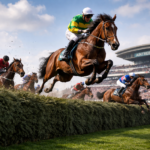
What sets the Grand National apart is not just the distance, but the nature of the fences and the demands placed on both horse and jockey. Stamina, jumping ability, experience, and temperament all play critical roles.
Why the Grand National Is So Different
Many races are won on speed alone. The Grand National is not one of them.
Key factors that make it unique include:
- Extended distance – far longer than most steeplechases
- Unusual fences – larger, more demanding, and differently constructed
- Large field sizes – increasing congestion and unpredictability
- Endurance over speed – horses must stay, jump, and cope with pressure
Because of this, form that looks strong on paper does not always translate at Aintree. Horses that excel elsewhere can struggle, while others rise to the challenge unexpectedly.
How the Race Is Run
The field completes two circuits of the Grand National course, encountering all the major fences on the first lap and again on the second, with a reduced number late on as the field thins.
The second circuit is where the race is often decided. Horses that have conserved energy, jumped economically, and avoided trouble earlier are far more likely to feature in the closing stages.
Understanding how the race unfolds, rather than focusing solely on individual runners, is one of the most important insights for anyone studying the Grand National.
Key Factors That Matter in the Grand National
While no single factor guarantees success, historical trends and race analysis consistently point to several areas that deserve attention:
- Stamina – proven ability to stay long distances
- Jumping reliability – particularly over larger fences
- Experience – horses familiar with Aintree or similar tests
- Weight carried – heavier weights increase the challenge
- Ground conditions – which can drastically alter race dynamics
These factors are explored in more detail throughout this site, with dedicated guides explaining how each influences performance.
Myths and Misconceptions
The Grand National is surrounded by myths that persist year after year, including:
- “It’s completely random”
- “Any horse can win”
- “Outsiders always do best”
While the race is undeniably unpredictable, it is not unanalysable. Patterns exist, mistakes are commonly repeated, and informed judgement consistently outperforms blind selection.
What This Site Is (and Is Not)
TheGrandNationalGuide.com exists to provide clear, neutral, and practical information about the race.
This site:
- ✔ Explains how the Grand National works
- ✔ Breaks down key trends and considerations
- ✔ Helps readers understand the race logically
It does not:
- ❌ Offer tipping services
- ❌ Promote betting aggressively
- ❌ Claim guaranteed outcomes
The goal is understanding first — decisions come second.
Where to Go Next
If you are new to the race, start with:
- A guide to Grand National history and past winners
- An explanation of how weights affect performance
- An overview of Cheltenham Festival form and its relevance
If you are more experienced, you may find value in:
- Fence-by-fence course breakdowns
- Trend analysis and common mistakes
- How race conditions change year to year
All of these resources are being built with clarity and accuracy in mind.
Final Thoughts
The Grand National is one of the most famous horse races in the world — and also one of the most misunderstood.
For many, it’s a once-a-year tradition. For others, it’s a race that rewards careful analysis, patience, and an understanding of what makes Aintree unique. Whether you are completely new to the Grand National or have followed it for years, this guide is designed to explain what makes the race different, why it is so challenging, and how to approach it with clarity rather than guesswork.
What Is the Grand National?
The Grand National is a steeplechase run annually at Aintree Racecourse, typically in early April. It is contested over a distance of approximately four miles and two furlongs, with horses required to jump 30 fences over two laps.
What sets the Grand National apart is not just the distance, but the nature of the fences and the demands placed on both horse and jockey. Stamina, jumping ability, experience, and temperament all play critical roles.
Why the Grand National Is So Different
Many races are won on speed alone. The Grand National is not one of them.
Key factors that make it unique include:
- Extended distance – far longer than most steeplechases
- Unusual fences – larger, more demanding, and differently constructed
- Large field sizes – increasing congestion and unpredictability
- Endurance over speed – horses must stay, jump, and cope with pressure
Because of this, form that looks strong on paper does not always translate at Aintree. Horses that excel elsewhere can struggle, while others rise to the challenge unexpectedly.
How the Race Is Run
The field completes two circuits of the Grand National course, encountering all the major fences on the first lap and again on the second, with a reduced number late on as the field thins.
The second circuit is where the race is often decided. Horses that have conserved energy, jumped economically, and avoided trouble earlier are far more likely to feature in the closing stages.
Understanding how the race unfolds, rather than focusing solely on individual runners, is one of the most important insights for anyone studying the Grand National.
Key Factors That Matter in the Grand National
While no single factor guarantees success, historical trends and race analysis consistently point to several areas that deserve attention:
- Stamina – proven ability to stay long distances
- Jumping reliability – particularly over larger fences
- Experience – horses familiar with Aintree or similar tests
- Weight carried – heavier weights increase the challenge
- Ground conditions – which can drastically alter race dynamics
These factors are explored in more detail throughout this site, with dedicated guides explaining how each influences performance.
Myths and Misconceptions
The Grand National is surrounded by myths that persist year after year, including:
- “It’s completely random”
- “Any horse can win”
- “Outsiders always do best”
While the race is undeniably unpredictable, it is not unanalysable. Patterns exist, mistakes are commonly repeated, and informed judgement consistently outperforms blind selection.
What This Site Is (and Is Not)
TheGrandNationalGuide.com exists to provide clear, neutral, and practical information about the race.
This site:
- ✔ Explains how the Grand National works
- ✔ Breaks down key trends and considerations
- ✔ Helps readers understand the race logically
It does not:
- ❌ Offer tipping services
- ❌ Promote betting aggressively
- ❌ Claim guaranteed outcomes
The goal is understanding first — decisions come second.
Where to Go Next
If you are new to the race, start with:
- A guide to Grand National history and past winners
- An explanation of how weights affect performance
- An overview of Cheltenham Festival form and its relevance
If you are more experienced, you may find value in:
- Fence-by-fence course breakdowns
- Trend analysis and common mistakes
- How race conditions change year to year
All of these resources are being built with clarity and accuracy in mind.
Final Thoughts
The Grand National remains a race that captures attention like no other. Its challenge lies not just in its scale, but in the way it tests every aspect of horse and rider.
By understanding why the race is different, rather than treating it as a spectacle alone, it becomes far more engaging — and far less mysterious.
This guide is your starting point.